

 For businesses looking to better understand who is visiting their website—and how to turn that traffic into real opportunities—Visual Visitor is here to help.
Your website is often the first interaction a potential customer has with your brand. Most teams invest heavily in design, messaging, and user experience. But far fewer invest the same effort into understanding who is visiting and what they’re doing once they arrive.
In this guide, we’ll cover:
- What website visitor tracking is
- Why website visitor tracking matters
- The different types of website visitor tracking solutions
- The pros and cons of website visitor tracking
- What features to look for in a visitor tracking platform
What Is Website Visitor Tracking?
Website visitor tracking is the process of identifying and analyzing how visitors interact with your website, then presenting that information in a way your sales and marketing teams can actually use.
Rather than relying solely on anonymous analytics, website visitor tracking provides insight into the visitor’s journey, including:
- Which pages they viewed
- How long they stayed
- What content captured their interest
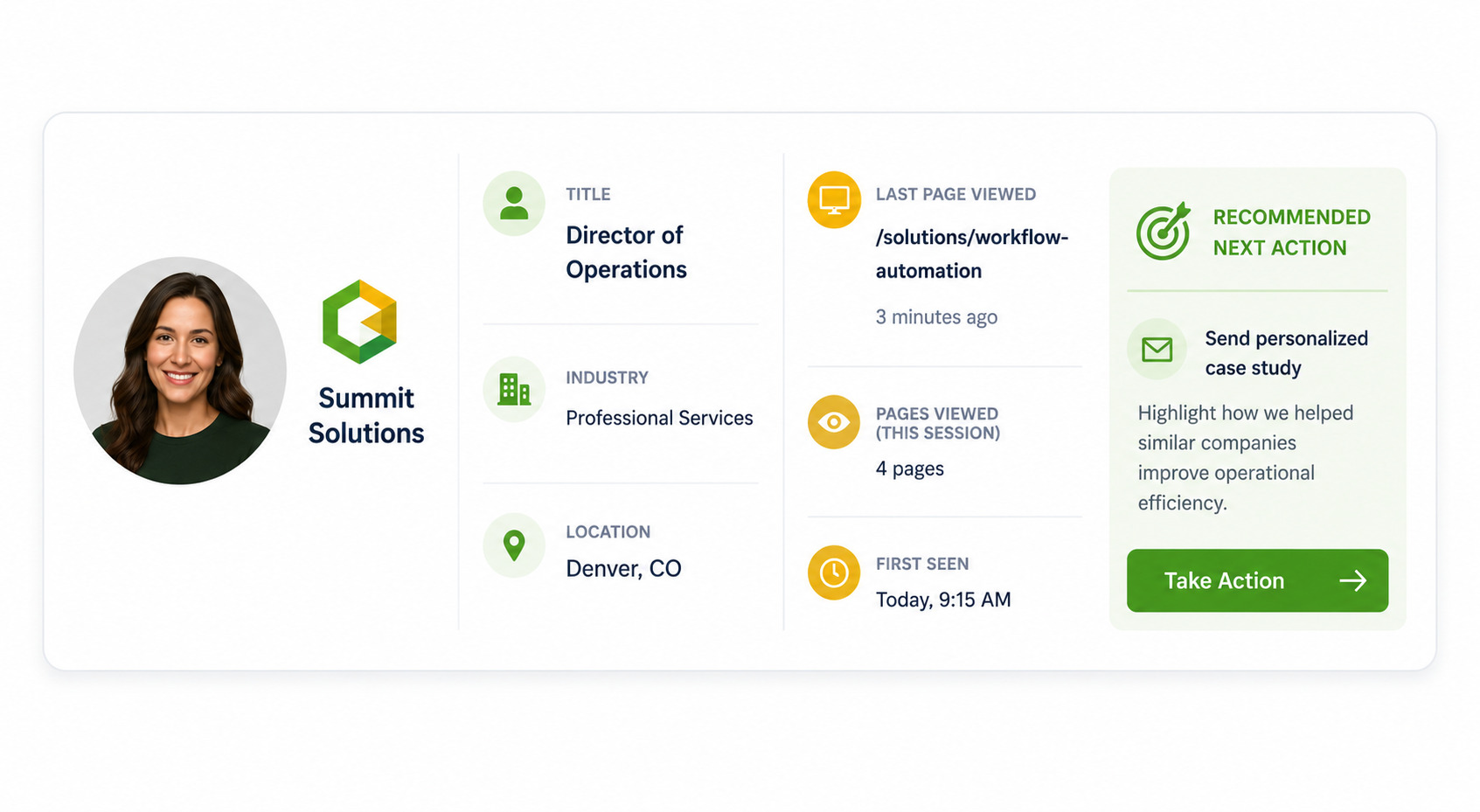
With Visual Visitor, this insight goes further by connecting website behavior to actionable business intelligence, including company and contact-level data where available.
This level of visibility allows your team to understand buyer intent, prioritize outreach, and tailor conversations based on real engagement—not guesswork.
Data Points You Can Access with Visual Visitor
Visual Visitor delivers dozens of meaningful data points, including:
- Identifiable contact information, including names, titles, phone numbers, and email
- Company name, location, and business details
- Page-level engagement and time spent on specific content
- Keyword, referral source, and campaign attribution
- Device and access insights, including mobile, tablet, and desktop usage
All of this data works together to give your team a clearer picture of which prospects are actively researching your solutions—and which ones are most likely ready for a conversation.
Why Website Visitor Tracking Is Important
In an ideal world, every website visitor would fill out a form, request a demo, or raise their hand the moment they’re interested. In reality, only a small percentage of visitors ever convert through a form on their first visit.
That means the majority of your website traffic remains anonymous—unless you’re using website visitor tracking.
Without visitor tracking, valuable buying signals go unnoticed. Interested prospects research your services, review key pages, and leave without ever engaging your sales team. Website visitor tracking helps bridge that gap by turning passive website activity into proactive sales opportunities.
For B2B organizations, especially, visitor tracking is no longer a “nice to have.” It’s a critical layer of insight that helps sales and marketing teams:
- Identify warm, in-market prospects earlier
- Prioritize outreach based on intent, not assumptions
- Reduce wasted time on cold or poorly matched leads
- Improve overall sales efficiency and conversion rates
Types of Website Visitor Tracking Solutions
Not all visitor tracking tools are created equal.
Many businesses start with traditional web analytics platforms that report on traffic volume, referral sources, and page performance. While helpful, analytics alone don’t tell you who is visiting—or whether those visitors are potential buyers.
Some solutions rely primarily on IP tracking, which identifies the IP address used to access your site and associates it with a company or general geographic location. IP tracking can provide surface-level insights, but on its own, it’s often limited and incomplete—especially in a world of remote work, mobile devices, and shared networks.
Visual Visitor goes beyond basic IP-based insights by combining behavioral tracking with firmographic and contact-level intelligence. This includes:
- Company identification, even when visitors are remote
- Device and access insights across desktop and mobile
- Deeper engagement tracking tied to buyer intent
The result is a more accurate, more usable view of your website traffic—one that your sales and marketing teams can actually act on.
The Pros and Cons of Website Visitor Tracking
The Benefits
Implementing website visitor tracking on your B2B website offers clear advantages:
- Real-time visibility into who is actively engaging with your website
- Faster follow-up with prospects already researching your offerings
- Shorter sales cycles by focusing on warm, intent-driven leads
- More informed conversations based on pages viewed and topics of interest
Visual Visitor enhances these benefits with real-time alerts that notify your team when qualified prospects are on your site. These alerts include more than just general company information—they provide actionable contact data when available, helping reduce manual research and speed up outreach.
When your team knows who visited, what they viewed, and how they engaged, they can reach out with relevance and confidence.
Things to Consider
As with any technology, there are important factors to evaluate:
- Cost and contracts: Many visitor tracking platforms come with high price points and long-term commitments. Visual Visitor offers flexible, cost-effective plans designed to scale with businesses of all sizes.
- Data complexity: Visitor data can be overwhelming if it’s not presented clearly. Visual Visitor simplifies this with an intuitive dashboard, customizable filters, and saved searches.
- Adoption and onboarding: Tools only deliver value when teams actually use them. That’s why Visual Visitor includes expert onboarding and ongoing support to help teams get results quickly and consistently.
What Features to Look for in a Website Visitor Tracking Solution
When evaluating visitor tracking software, look for a platform that helps you act—not just observe. Key features to prioritize include:
- Real-time visitor identification and alerts
- Actionable company and contact-level data
- Clear visibility into page-level engagement and buyer intent
- Easy-to-use dashboards and filtering tools
- Integration with your sales and marketing workflows
Visual Visitor has been a trusted leader in website visitor tracking since 2009. Visitor tracking is just one part of our broader B2B lead intelligence platform, which also includes buyer intent campaigns, email tracking, and additional tools designed to turn anonymous traffic into qualified opportunities.
We help you uncover the full story behind your website traffic—so your team can focus on the prospects that matter most.
Ready to see how website visitor tracking can support your growth? Try Visual Visitor and experience the difference for yourself.