

 Customer identity has changed dramatically over the last two decades. What once looked like a collection of isolated sessions, list records, and campaign touches has evolved into a more connected and strategic view of people, accounts, and behavior across channels. This evolution reflects changes in technology, regulation, buyer behavior, and the growing need for revenue teams to understand not just what happened, but who is actually behind that activity.
At Visual Visitor, this shift is especially relevant because website visitor identification sits at the crossroads of modern customer identity strategy. It turns the anonymous traffic that used to disappear into data that marketing and sales can use for outreach, prioritization, and measurement.
From Sessions to People
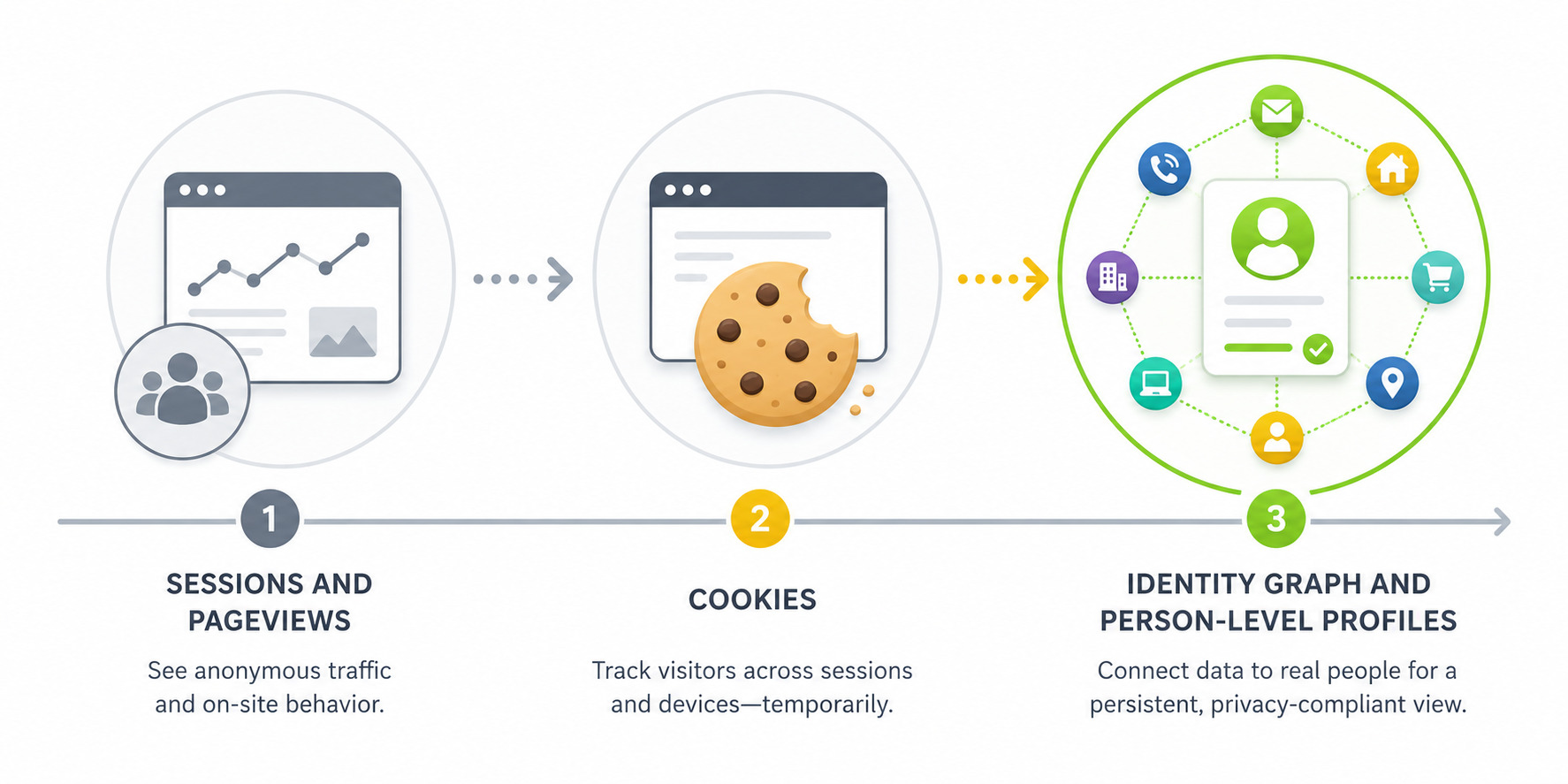
In the early stages of digital marketing, identity was often treated as a byproduct of conversion. If a visitor filled out a form, made a purchase, or logged in, the system gained a record. If not, the visit largely remained anonymous. That model left a huge blind spot because most website visitors never identified themselves directly.
As the market matured, cookies helped teams create continuity across some browsing behavior. That was a major step forward, but it still centered identity around devices and sessions rather than around the full person or account. It improved observation but not necessarily understanding.
Today, customer identity is moving toward a more connected model. Identity resolution, identity graphs, deterministic matching, enrichment, and first-party activation all push the market beyond simple tracking and toward a more useful representation of the buyer journey.
Why Customer Identity Had to Evolve
The old model broke down because modern buying behavior became too complex for session-based thinking. Buyers research from multiple devices, consume content across channels, revisit sites over longer timeframes, and involve more internal stakeholders in purchasing decisions. A fragmented customer journey demanded a more durable identity framework.
Privacy expectations also changed. As regulations and platform controls became more important, organizations could no longer depend on opaque, loosely governed data practices if they wanted sustainable performance. The evolution of customer identity has therefore been shaped by two forces at once: the need for better recognition and the need for more defensible data use.
Key Stages in the Evolution of Customer Identity
It helps to think about this shift in stages rather than as one sudden change:
- Anonymous web analytics stage, where traffic was measured mostly in visits, page views, and broad campaign performance.
- Cookie-based audience stage, where marketers gained limited continuity and retargeting capabilities through browser-level identifiers.
- CRM-centered stage, where identity became stronger after a form fill or sale but still remained disconnected from much anonymous pre-conversion activity.
Identity-first stage, where visitor identification, resolution, enrichment, and activation work together to connect more of the journey to real people and accounts.
Each step added more context and utility. The latest stage is different because it aims to make identity usable before the buyer voluntarily converts, not only after.
What Customer Identity Means Now
Customer identity today is more than a contact record in a database. It is an evolving, multi-source representation of a person or account that can connect behavior, fit, source, and engagement over time. That richer identity view supports better segmentation, stronger personalization, cleaner attribution, and more confident prioritization across revenue teams.
For B2B teams, this can include company, title, seniority, past engagement, and account context. For B2C teams, it can include demographic signals, product interest, visit history, and purchase intent indicators. In both cases, the goal is the same: reduce guesswork and increase actionability.
How Visual Visitor Reflects This Evolution
From inside Visual Visitor, we see this shift toward identity‑first marketing play out every day as customers try to turn more of their anonymous engagement into real, usable customer insight.
Our platform is built around the core functions that define modern customer identity:
- Visitor identification
- Identity resolution
- Enrichment
- Suppression
- Person‑level advertising
Together, these capabilities form an identity stack that connects previously disconnected sessions and signals into profiles that marketing and sales can actually work with.
In practice, that means a website visit is no longer just another line in an analytics dashboard. With a consent‑based identity framework behind it, that visit becomes a richer signal tied to real pipeline opportunity, more precise audience building, and better‑informed follow‑up across channels. This is the practical outcome of customer identity’s evolution: it expands what teams can do with the engagement they’re already earning instead of letting it vanish into anonymous metrics.
Final Thoughts
Customer identity has evolved, and the best-performing marketing teams are evolving with it. Speak with a product specialist at Visual Visitor to see how better visitor identification and identity-first activation can help your team turn more engagement into measurable pipeline.
FAQ
Q: What does customer identity mean in marketing?
A: Customer identity refers to the connected set of identifiers, attributes, and behaviors that help a brand recognize and understand a person or account across interactions.
Q: Why has customer identity evolved?
A: It evolved because buyer journeys became more fragmented, cookies became less dependable, and privacy expectations pushed organizations toward more durable and accountable methods.
Q: How is modern customer identity different from traditional CRM data?
A: Traditional CRM data often starts after a form fill or sale, while modern customer identity aims to connect more of the pre-conversion journey as well.
Q: What role does identity resolution play in customer identity?
A: Identity resolution connects separate identifiers and interactions into a unified profile that gives customer identity structure and continuity.
Q: Is customer identity relevant for both B2B and B2C?
A: Yes. The data points and use cases differ, but both models benefit from better recognition, enrichment, and activation.
Q: How does Visual Visitor support customer identity?
A: Visual Visitor helps teams identify visitors, enrich profiles, manage suppression, and activate person-level marketing and sales workflows from real engagement signals.