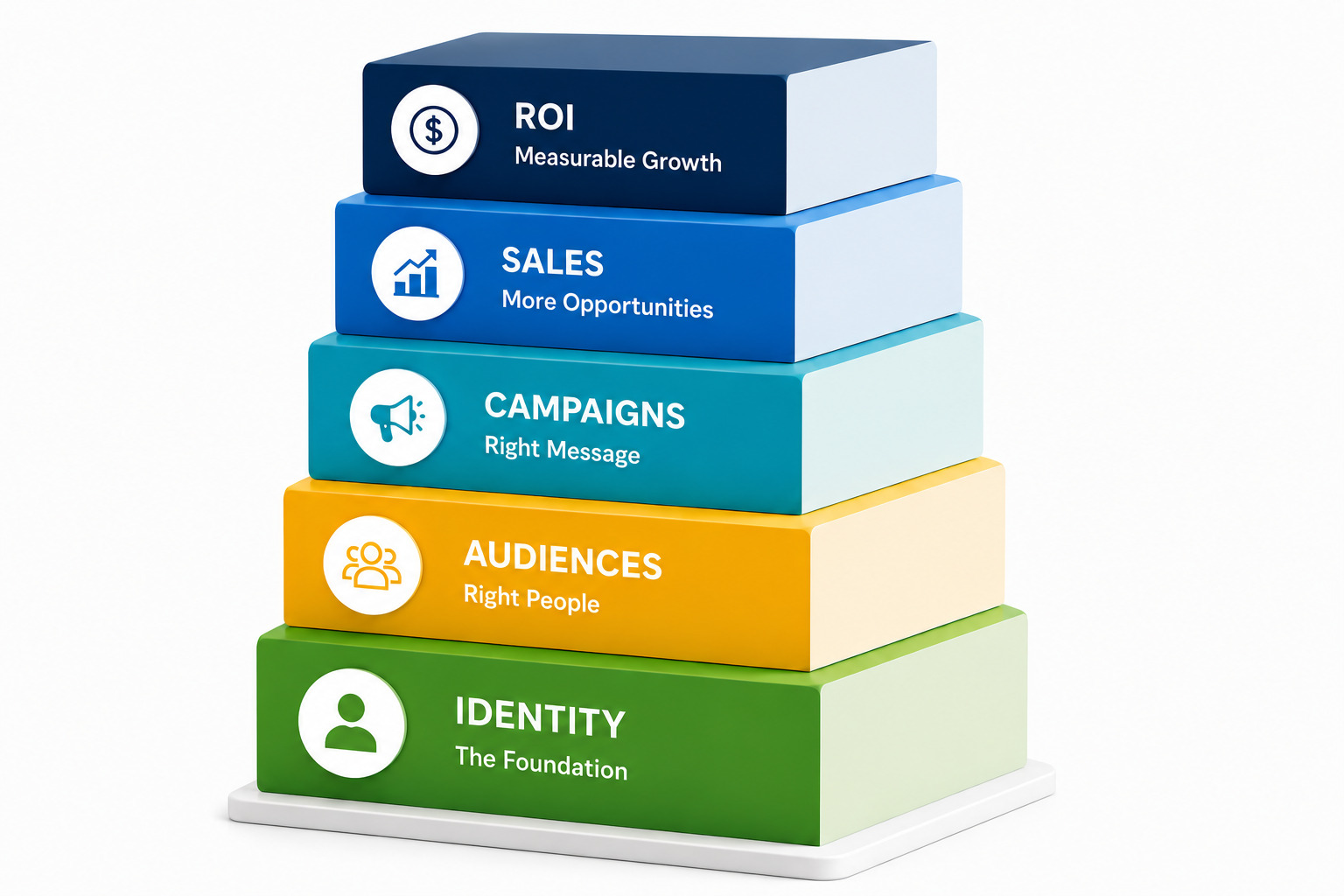

Your analytics dashboard looks healthy. Sessions are up. Bounce rate is down. Three people spent four minutes on your pricing page yesterday.

You have no idea who they were.
That gap has a name, and it has a price. Anonymous website traffic is the portion of your audience that shows real buying behavior and then vanishes without a form fill. Most marketing teams treat it as normal. It is normal. It is also the single largest source of unbilled revenue sitting inside your funnel right now.
At Visual Visitor, we spend our days looking at what happens between the click and the conversion. The pattern is remarkably consistent across industries. The people you never hear from are usually further along than the people who fill out your form.
What Is Anonymous Website Traffic?
Anonymous website traffic refers to visitors who browse your site without identifying themselves. They don't submit a form, log in, or click an email link you can tie back to a record. Analytics counts the session but not the person, so their behavior stays disconnected from any name, company, or CRM entry.
Standard analytics tools were built to measure traffic, not people. Google Analytics tells you a session came from paid search, viewed four pages, and left. It cannot tell you that the session belonged to a VP of Operations at a 400-person logistics company who is actively shortlisting vendors.
That distinction is the whole ballgame.
The Math Nobody Puts in the Board Deck
Let's put actual numbers to the problem, because "we should convert more visitors" is not a business case.
Research shows that only about 3.5% of B2B web visitors fill out on-site forms. Additional benchmark data puts the median B2B visitor-to-lead conversion rate at 2.3%. Pick whichever number you like. Both say the same thing. Roughly 96 to 97 out of every 100 people who visit your site leave no trace you can act on.
Now run it against a modest month. Say you get 10,000 visitors. At a 3% conversion rate, you capture 300 leads. The other 9,700 sessions produced nothing you can follow up on. If your average deal is worth $15,000 and even 1% of that anonymous group was a genuine opportunity, that's 97 potential deals you never knew existed.
You paid for all 10,000 of those visits. You are only monetizing 300.
That is the hidden cost. It doesn't appear as a line item, which is exactly why it survives budget reviews year after year.
The Cost Compounds in Three Directions
The damage isn't limited to missed leads. Anonymous traffic quietly degrades three other parts of your operation.
Here is where the leakage shows up once you start looking:
- Wasted ad spend. You're paying to acquire visitors, then letting the majority of them go unidentified. Your true cost per lead is much higher than your reported cost per lead.
- Distorted attribution. When most of your traffic is invisible, your channel reporting is built on the small, self-selecting slice of people willing to fill out a form. That is not a representative sample.
- Sales working stale lists. Reps spend their day on cold outbound while people who just read your comparison page get nothing. The warmest prospects in your database aren't in your database.
Why Your Best Prospects Stay Anonymous on Purpose
There's a temptation to blame the form. Shorten it, move it above the fold, add a chatbot. Those tactics move the needle a little, but they miss the underlying behavior shift.
B2B buyers now complete roughly 70% of their buying journey before they ever contact a vendor. They read your pricing page, compare you against two competitors, pull in a colleague, and build a shortlist. All of that happens in silence.
By the time someone raises their hand, the evaluation is mostly finished. You're not entering the conversation early. You're joining it late and hoping you made the cut.
Serious buyers stay anonymous because staying anonymous is strategically smart for them. They don't want a rep calling on day two of research. Your job isn't to force the disclosure. Your job is to recognize the buyer without demanding a form first.
Turning Anonymous Traffic Into Named Opportunity
This is the problem WebID was built to solve. It's Visual Visitor's person-level identification engine, and it works in two parts depending on who you sell to.
WebID +Person
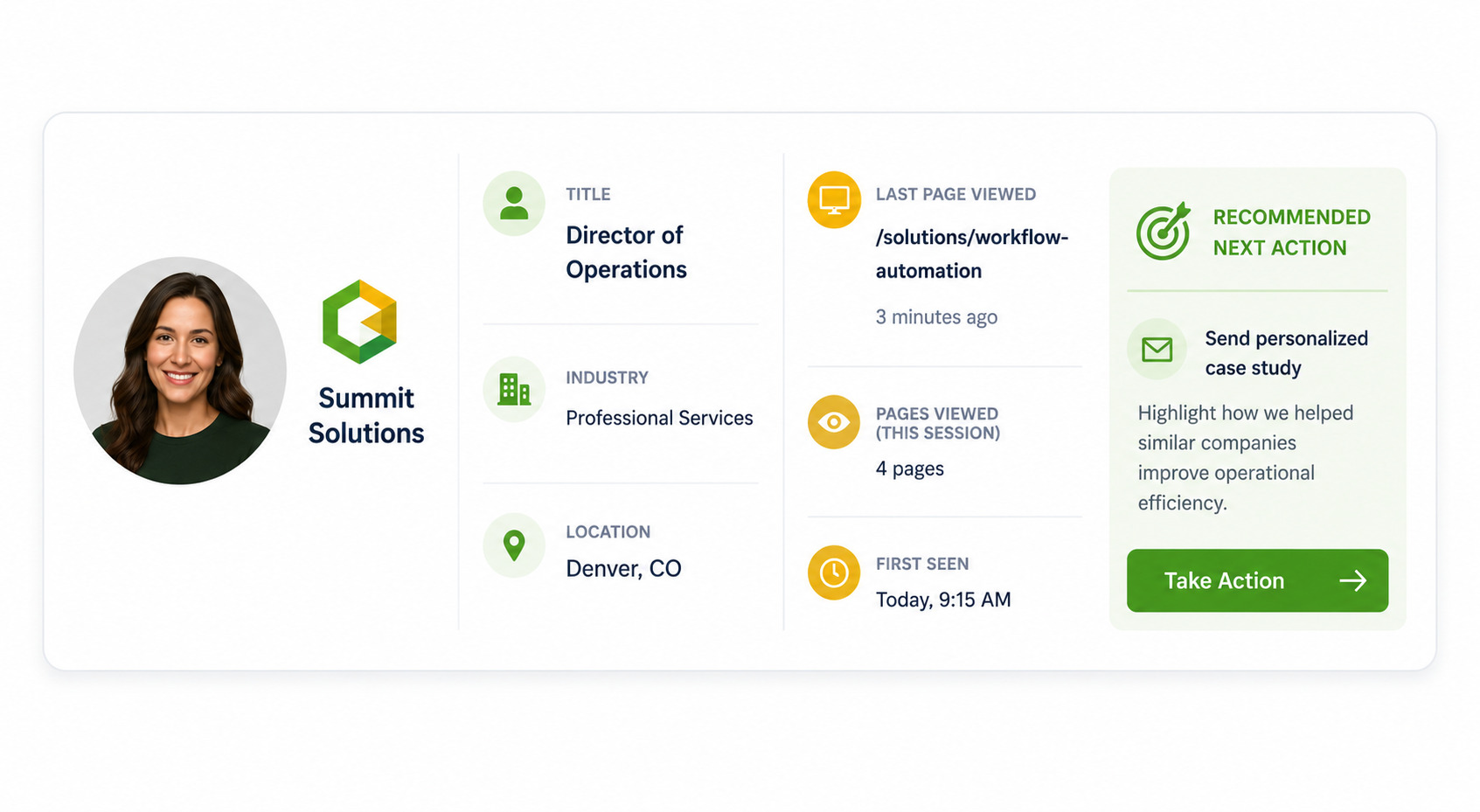
WebID +Person handles individual-level identification. It resolves an anonymous visitor into a real person with first name, last name, validated email, and up to 37 additional data points as available. Those data points cover the practical things you actually need for segmentation, including location, employment details, social profiles, traffic source, keyword, and the specific pages the visitor viewed.
Identification is consent-based, and email validation runs at 99% accuracy at no additional cost.
WebID +Employee
WebID +Employee handles the B2B side. It connects visitor activity to professional identity, so you see the employer, the role, the company size, the estimated revenue, and the industry behind a session. That context tells you whether a visit represents a real buying opportunity or a competitor poking around.
Together, the two modules identify 50 to 55% of U.S. website visitors. Compare that to your current 3%.
Filtering so sales doesn't drown
More identified visitors is only useful if the right ones reach your reps. Inside Configuration, you build ICP (Ideal Customer Profile) definitions across 42+ attributes including industry, company size, annual revenue, location, decision-maker status, and product interest.
Everything off-profile gets filtered before it hits the lead feed. Current customers, unqualified traffic, and open opportunities can all be suppressed. Your sales team sees a short list of real prospects, not a firehose.
Setup is one line of JavaScript in your site footer. The data flows into what you already use, including Salesforce, HubSpot, Mailchimp, Constant Contact, Slack, Google Sheets, and webhooks.
What Changes When Visitors Have Names
The operational shift is bigger than "more leads."
Your ad reporting gets honest, because you can finally see which campaigns bring qualified people rather than sessions that look qualified. Your nurture programs get real fuel, since identified visitors flow into email automatically instead of waiting on a gated asset. And your reps stop guessing, because a prospect who viewed pricing twice this week is a very different call than a name pulled off a purchased list.
Speed matters most. A visitor who left ten minutes ago remembers you. A lead you contact eleven days later does not.
Stop Paying for Traffic You Can't Use
Anonymous website traffic isn't a technical inconvenience. It's a revenue problem wearing an analytics costume. Every month you leave it unaddressed, you're funding acquisition for an audience you've decided in advance you won't talk to.
The fix isn't a better form. It's identification that works whether or not the buyer feels like introducing themselves.
Want to see what your anonymous traffic actually looks like? Schedule a meeting with a Visual Visitor product specialist. We'll walk through your site's traffic, show you the percentage we can identify, and map out what that recovered pipeline is worth. It takes about 20 minutes, and you'll leave with a real number instead of a guess.
Frequently Asked Questions
What is anonymous website traffic?
Anonymous website traffic is any visitor who browses your site without identifying themselves through a form, login, or trackable email click. Your analytics records the session and its behavior, but the person behind it stays unknown, so marketing and sales have no way to follow up.
How much of my website traffic is anonymous?
For most B2B sites, 96 to 97% of traffic stays anonymous. Research found only about 3.5% of web visitors fill out on-site forms, and benchmark data puts median B2B visitor-to-lead conversion at 2.3%.
Can you identify website visitors without a form fill?
Yes. Person-level identification resolves visitors using consent-based identity data rather than form submissions. Visual Visitor's WebID identifies 50 to 55% of U.S. website visitors by name, validated email, and 37+ additional data points without requiring any action from the visitor.
Is website visitor identification compliant with privacy laws?
Visual Visitor's identification is consent-based and adheres to current privacy regulations including the California Consumer Privacy Act (CCPA) and international data regulations. The platform includes a built-in Consent Management tool so you can configure controls for your specific requirements.
What's the difference between WebID +Person and WebID +Employee?
WebID +Person identifies the individual behind a visit with personal contact and behavior data, which suits B2C and individual-level outreach. WebID +Employee connects that visit to professional identity, employer, role, company size, and industry, which suits B2B qualification and account-based programs.
How is this different from Google Analytics?
Google Analytics measures traffic, not people. It reports sessions, sources, and page views in aggregate. Visitor identification attaches a real name, email, and firmographic profile to individual sessions, so you can act on behavior instead of only reporting on it.
How long does it take to set up visitor identification?
Installation requires pasting one line of JavaScript into your site header, footer, or body, with the footer recommended. Most teams complete setup in under an hour, and identified visitors begin flowing into connected CRM and email platforms shortly after.
Will this flood my sales team with unqualified leads?
Not if you configure ICP filtering. Visual Visitor lets you build Employee ICP and Company Only ICP definitions across 42+ attributes including industry, company size, revenue, location, and decision-maker status. Current customers and off-profile traffic get suppressed before reaching your lead feed.