
 Sep 15, 2026 | 4 minute read
  Sales teams make better decisions when they know more than just who opened an email or which company visited a page. They make better decisions when they can see who is engaging, what that engagement signals, and how it connects to fit, timing, and intent. That is where identity becomes powerful. It gives sales teams context they can use to prioritize outreach, tailor messaging, and focus their time where it matters most.
At Visual Visitor, identity data is designed to bridge the gap between marketing activity and sales action. Instead of handing sales a vague set of anonymous visits or broad account assumptions, identity-based workflows can surface real individuals, validated contact information, behavioral signals, and supporting context that improves decision quality.
Why Generic Lead Data Falls Short
Most sales teams have dealt with the frustration of incomplete lead context. A rep may receive a form fill with little detail, an account visit with no named contact, or a campaign response that does not reflect true buying intent. That lack of clarity slows prioritization and often leads to generic outreach that underperforms.
Identity helps solve this by making engagement more legible. When website behavior, traffic source, company detail, and individual-level information are connected, sales teams can better judge whether a prospect belongs in immediate follow-up, a nurture sequence, or a lower-priority queue.
How Identity Improves Sales Prioritization
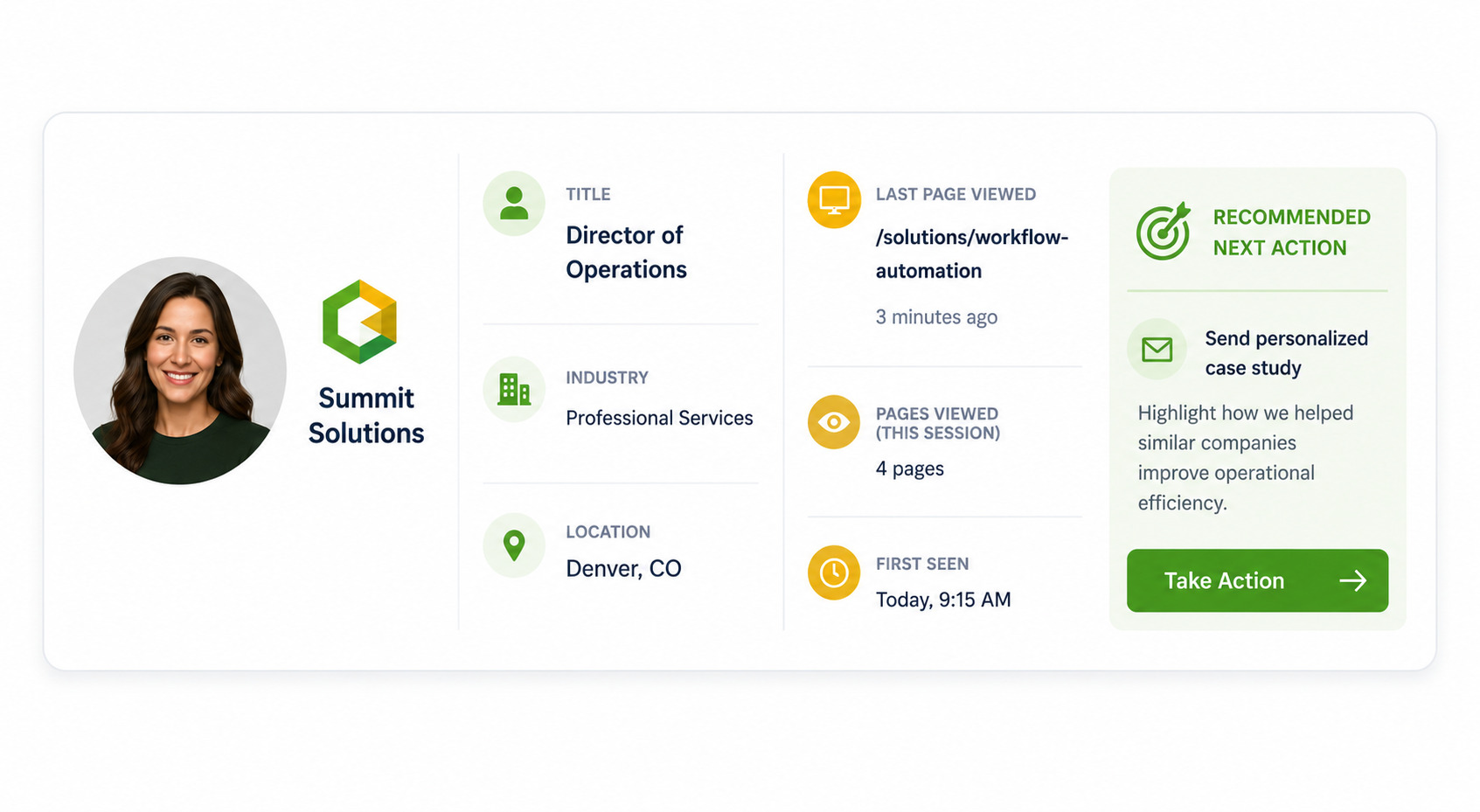
A major sales challenge is deciding who deserves attention first. Identity-based insights improve that decision because they make buying signals more concrete. Instead of seeing only that “someone” from a company visited, a rep may be able to see the individual, their role, their company details, and the specific pages or patterns that suggest meaningful intent.
That changes prioritization in several ways:
- Reps can focus first on identified visitors showing high-intent behaviors, such as repeated site visits or pricing-page engagement.
- Teams can screen for fit using company size, industry, title, or other qualifying attributes.
- Sales managers can route opportunities more effectively based on geography, segment, or account ownership.
- Organizations can shorten the delay between buyer activity and outreach, improving speed to lead.
This is especially valuable in B2B environments, where the difference between a casual researcher and an in-market decision-maker can determine whether outreach is timely or wasted.
How Identity Improves Personalization
Better personalization does not begin with better copy. It begins with better context. Identity gives sales teams a stronger starting point because it combines who the buyer is with what they have actually done.
That allows outreach to be more relevant in several ways. A rep can reference the category of content viewed, align their talking points to the buyer’s role, or adjust their approach based on account profile and observed interest. Our platform also features AI-assisted sales workflows that use buyer profile data to help shape communication strategy and messaging guidance.
When personalization is grounded in genuine identity and behavior data, it tends to feel more timely and less generic. That improves the odds of starting a meaningful conversation rather than sending another ignored message.
Identity and Sales-Marketing Alignment
One of the biggest hidden benefits of identity is that it improves alignment between sales and marketing. Marketing gains clearer evidence about which programs attract qualified attention, and sales gains better context about which interactions deserve outreach.
That shared visibility reduces friction. Instead of arguing about lead quality in the abstract, teams can review the same identity-backed signals, the same traffic source context, and the same engagement behaviors. Stronger identity therefore improves not just individual decisions, but the consistency of decision-making across the revenue team.
How Visual Visitor Supports Better Sales Decisions
We support better sales decisions by turning visitor identity and behavior into clear, actionable signals instead of raw noise. Our platform identifies individual website visitors at the person level and enriches them with company data, job title, pages viewed, traffic source, and validated contact details, so your sales team can see who is engaging and what that engagement actually means. In many cases, we also layer on AI-guided outreach recommendations that help reps tailor emails, calls, and follow-up sequences to each prospect’s profile and communication style.
This matters because sales teams do not need more disconnected data points. They need clearer signals, faster routing, and better context for human judgment. When identity is integrated into a practical sales process instead of left inside isolated systems, your reps can prioritize high-intent visitors, reach out while interest is fresh, and personalize conversations based on real behavior and fit instead of guesswork.
Final Thoughts
If your sales team needs clearer signals and better timing, speak with a product specialist at Visual Visitor. Identity-backed visitor intelligence can help your team prioritize the right prospects, personalize outreach, and turn more high-intent engagement into qualified conversations.
FAQ
Q: How does identity help sales teams?
A: Identity helps sales teams see who is engaging, what signals matter, and how to prioritize and personalize outreach more effectively.
Q: What kinds of sales decisions improve with identity?
A: Prioritization, routing, personalization, timing, and qualification all improve when sales has stronger identity and behavior context.
Q: Why is identity important for speed to lead?
A: It helps surface high-intent activity faster and connects that activity to real people or accounts, reducing delay before follow-up.
Q: Is identity useful only for outbound sales?
A: No. It also helps inbound follow-up, account-based motions, lead reactivation, and coordination with marketing.
Q: How does Visual Visitor support sales enablement?
A: Visual Visitor helps identify visitors, validate contact data, enrich records, and surface context that sales teams can use for better outreach decisions.
Q: Can identity improve alignment between sales and marketing?
A: Yes. Shared identity-backed signals create a common view of lead quality, engagement, and campaign influence.