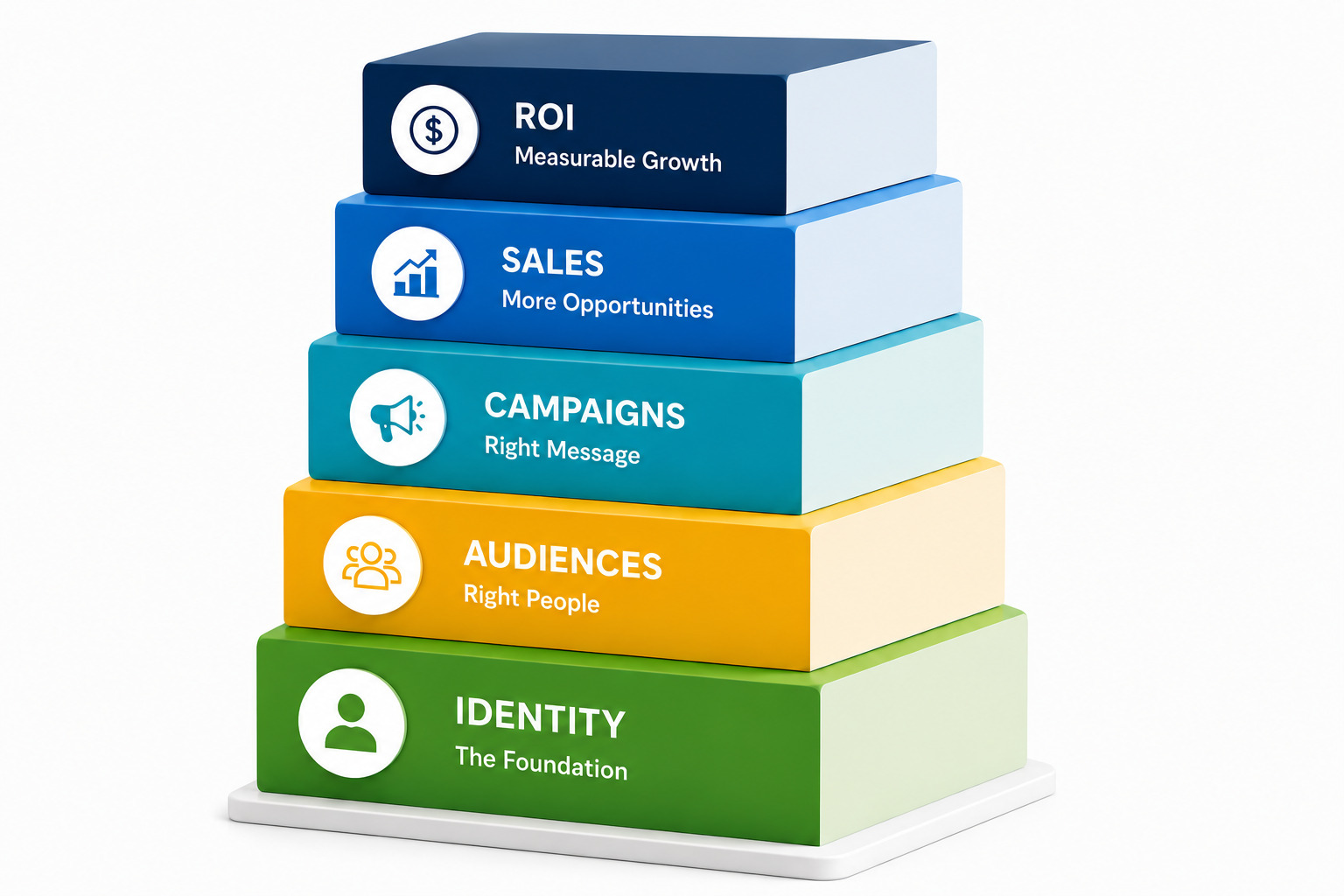

 Traditional retargeting follows cookies. WebID +Person follows people. That one shift turns anonymous, short-lived traffic into a permanent, owned audience you can email, nurture, and convert for years.
Why Traditional Retargeting Falls Short
Retargeting was built for a world where third-party cookies were cheap and abundant. That world is disappearing. Even where retargeting still works, it has structural limits.
Here is what most teams experience with traditional retargeting:
- You only reach visitors who accept cookies and stay within a fixed lookback window, often 14–30 days, so large portions of your traffic are never remarketed.
- You target browsers, not people, which means you cannot see who is behind the visit, cannot enrich records, and cannot tie engagement to specific buyers or accounts.
- You depend on ad platforms to “own” the audience, so once you stop spending or change platforms, that audience essentially disappears.
- You have minimal cross-channel continuity, making it hard to coordinate email, sales outreach, and ads around the same individuals.
Retargeting is reactive, fragile, and rented. It helps, but it does not build durable customer equity on its own.
How WebID +Person Changes the Game
WebID +Person flips the model. Instead of asking, “Which browsers should we chase with ads?” you ask, “Which people just visited, and how do we bring them into our owned universe?”
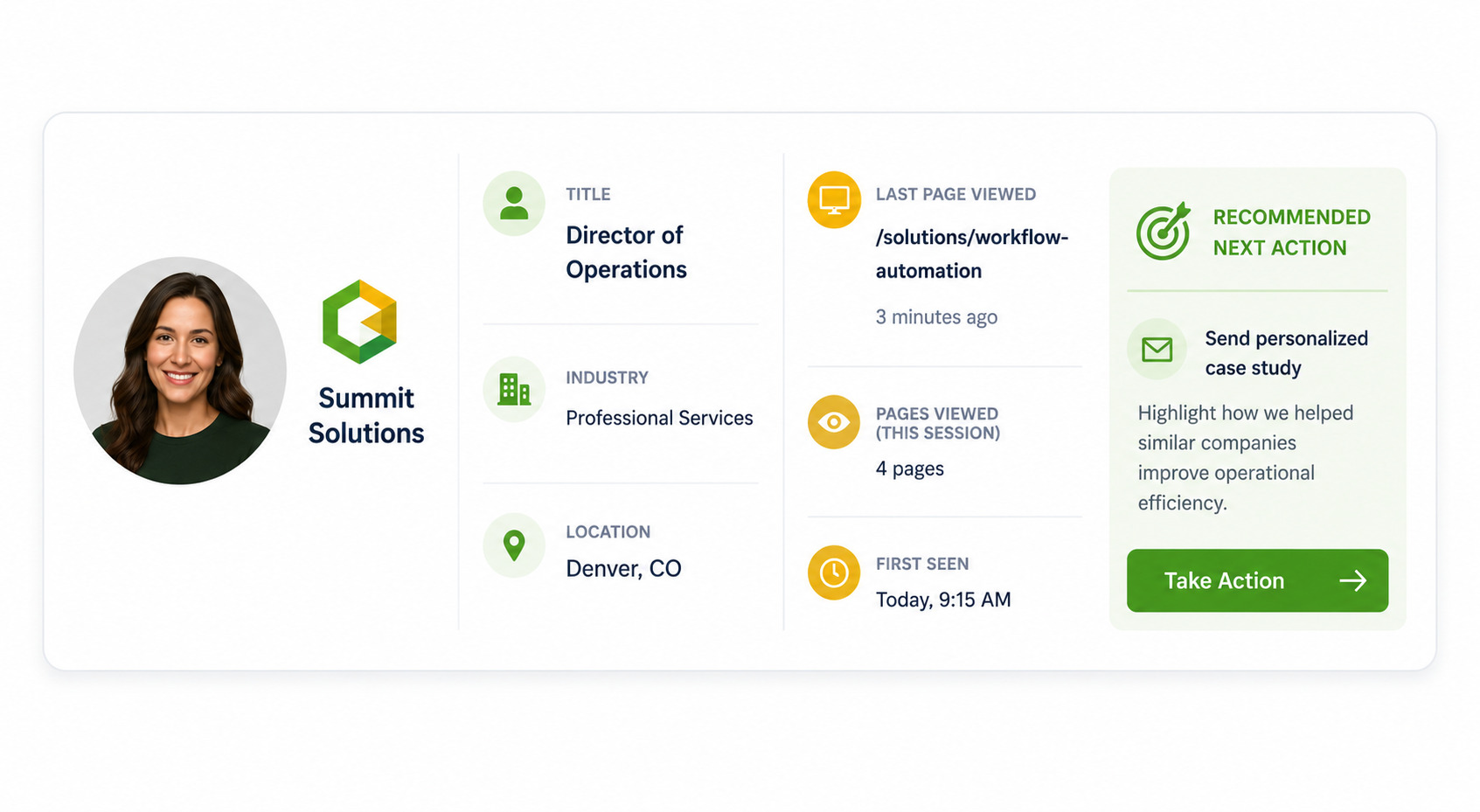
WebID +Person identifies a large percentage of recent U.S.-based visitors with:
- First name, last name, and email address, all on a consent-based foundation designed for modern privacy standards.
- 35+ additional data points, including demographics, firmographics, campaign source, search term, and page-level behavior.
- Fully validated email addresses, scored and checked in real time, so you protect sender reputation and keep bounce rates low.
Once a visitor is identified, they do not “expire” after 30 days. You can keep marketing to them across channels for as long as it is appropriate and compliant. That is the core of an owned audience strategy.
Anonymous Traffic vs Owned Audiences
Most websites convert less than 2% of visitors into form fills. That means over 98% of traffic is invisible to your CRM and marketing automation if you rely only on forms and traditional analytics. WebID +Person bridges this gap by turning that silent majority into known, reachable people.
The shift looks like this:
- Anonymous traffic becomes a named, contactable audience with rich profile and behavior data.
- One-time sessions become long-term records that can be scored, segmented, and nurtured over time.
- Ad-only follow-up becomes a coordinated engagement strategy across email, ads, direct mail, and sales outreach using the same underlying identity.
Instead of renting attention from platforms each month, you are steadily building your own high-intent contact database from visitors already showing interest.
WebID +Person vs Retargeting: Practical Differences
To make the contrast concrete, look at how each approach handles key parts of your funnel.
Acquisition and tracking:
- Retargeting tags fire when a browser hits your site, drop a cookie, and then rely on that cookie’s survival to show ads later.
- WebID +Person captures consented identity and 40+ data points about who the visitor is, how they found you, and what they did on your site.
Audience lifespan:
- Retargeting audiences typically decay quickly as cookies expire or fall outside the lookback window.
- WebID +Person audiences grow over time as you continuously add validated contacts to your email, CRM, or CDP for long-term use.
Channel flexibility:
- Retargeting is primarily limited to ad impressions on specific networks.
- WebID +Person data can power email campaigns, sales outreach, direct mail, social custom audiences, and even Person-Level Advertising audiences.
Ownership and portability:
- Retargeting audiences live inside ad platforms; you cannot easily take them with you.
- WebID +Person audiences live in your systems and Visual Visitor, and you can sync them to whatever platforms you choose via integrations.
When you combine these differences, the result is clear: retargeting is a tactic; WebID +Person is infrastructure.
Turning Visitors Into Subscribers and Buyers
Once WebID +Person starts feeding you identity and behavior, your next job is to use it to move people through the funnel. That is where “owned forever” becomes real.
A simple, effective approach is:
- Add identified visitors directly into segmented email journeys or nurture tracks that reflect the pages they viewed, the campaigns that brought them in, and their role or company size.
- Use behavior data, like time on page and number of pages visited, to prioritize who gets fast follow-up, who enters a lighter nurture path, and who should be flagged for sales.
- Sync high-intent audiences into your DSP, social platforms, or Person-Level Advertising so your ads follow known people, not anonymous cookies.
Because the email addresses are cleaned and validated in real time, you can scale outreach with confidence while protecting deliverability and compliance.
Where Retargeting Still Fits In
This is not an argument to abandon retargeting entirely. It is about putting retargeting in its proper place inside a broader identity-first strategy. Retargeting still plays a useful role when you:
- Want a simple, lightweight follow-up to low-intent visitors who may not be a fit for deeper nurture yet
- Are testing creative quickly and need fast feedback on which messages resonate at the top of the funnel
- Want an extra touch layer on top of your owned audiences for brand reinforcement
The difference is that retargeting becomes a supporting channel, not the backbone of your remarketing. WebID +Person owns that role by giving you a persistent, portable identity.
Building A Future-Proof Remarketing Engine
Privacy regulations, cookie deprecation, and rising ad costs are all pushing marketers toward first-party data and consent-based identity. WebID +Person is built for that reality.
If you rely mainly on traditional retargeting today, a practical transition looks like this:
- Add WebID +Person to your site to start capturing consent-based identities and 40+ data points for a significant share of your U.S.-based traffic.
- Connect Visual Visitor to your email, CRM, and ad platforms so that identified contacts flow automatically into the tools you already use.
- Gradually reduce dependence on cookie-only retargeting while increasing investment in email, Person-Level Advertising, and identity-based audiences.
Over time, you will see less spend on rented, cookie-based impressions and more revenue coming from the audience you actually own.
To find out how to get started with WebID +Person, speak to a member of our team.
FAQ
Q: What is WebID +Person and how is it different from traditional retargeting?
A: WebID +Person identifies real people behind website visits using consent-based data, including names, emails, and behavioral insights. Unlike traditional retargeting, which relies on cookies and anonymous browsers, it allows you to build a persistent, owned audience you can market to across multiple channels.
Q: Why is traditional retargeting becoming less effective?
A: Traditional retargeting depends on third-party cookies, which are declining due to privacy regulations and browser restrictions. It also limits audience reach, lacks identity-level insights, and creates short-lived audiences that disappear when ad spend stops.
Q: How does WebID +Person help turn anonymous traffic into leads?
A: It converts otherwise anonymous visitors into identifiable contacts by capturing validated email addresses and rich data points. This allows businesses to nurture and engage the 98% of visitors who typically never fill out a form
Q: Can WebID +Person replace retargeting completely?
A: Not entirely. Retargeting still has value as a supporting tactic for brand awareness and quick testing. However, WebID +Person becomes the foundation of your strategy by enabling long-term, multi-channel engagement with owned audiences.
Q: What are the main benefits of building an owned audience?
A: Owned audiences don’t expire, aren’t tied to ad platforms, and can be used across email, sales outreach, ads, and more. This creates long-term marketing value, reduces reliance on paid ads, and improves conversion opportunities over time.